There was a time when being a teenage girl felt like stepping into possibility. Not because life was perfect. Not because every girl was living in a movie. But because culture made room for her imagination.
Teen girls used to be spoken to as if they mattered. Their feelings mattered. Their friendships mattered. Their crushes, their awkwardness, their style experiments, their bedroom walls covered in cutouts and chaos — all of it mattered. There was a sense that this season of life was not just a bridge to adulthood, but a world of its own.
And now? It feels like that world has gone quiet as women develop brands that fit a mould.
Somewhere along the way, teenage girlhood stopped being something the media celebrated and became something the algorithm monetised.
What teen media once offered wasn’t realism. It was fantasy, possibility, projection.
You didn’t watch those stories because you genuinely expected to wake up and find out you were secretly royal, become a pop star overnight, or fall in love in some cinematic European summer. You watched because those stories expanded your emotional world. They gave shape to longing. They made ordinary life feel charged with possibility. That kind of storytelling did something powerful: it invited girls to imagine themselves as the main character of their own becoming.
Today, so much of the content aimed at young girls feels flatter. Less expansive. Less imaginative. More transactional.
Instead of fantasy, they’re being fed aspiration.
Instead of wonder, consumption.
Instead of self-discovery, sameness.
And maybe that’s why the recent Miley Cyrus / Hannah Montana 20th anniversary moment felt so strangely underwhelming.
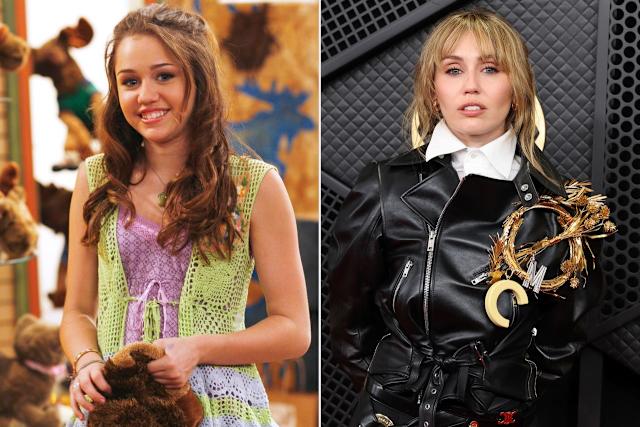
Not devastating. Not scandalous. Just… off.
I went into it already expecting a certain level of disappointment, so with that in mind, I actually thought it was fine. Which is probably the most damning review possible for something built on twenty years of cultural memory. Fine is not what people want from the thing that soundtracked their childhood, soundtracked their bedroom mirror performances, soundtracked an entire era of side bangs, glitter microphones, and pretending your ordinary life could crack open into something cinematic at any moment.
What I did enjoy was the way the special walked through Miley’s history and made a point of naming Hannah as her big break. That mattered. Because celebrities do not always speak about their past work — or their audiences — with that kind of gratitude. And whatever else the special lacked, it did give the impression that Miley understands what that era meant to people. It felt like she was genuinely thankful that fans followed her through every reinvention over the last twenty years, in the same way many of us are thankful to her for the childhood memories, the chaos, and the absolute jams.
But that is also exactly why the whole thing felt like such a missed opportunity.
Because if you are going to do a Hannah Montana anniversary special, then make it meaningfully about Hannah Montana.
Not adjacent to Hannah. Not Hannah-inspired. Not a glossy retrospective where the original emotional architecture gets reduced to set dressing while random contemporary relevance gets brought in to keep the thing “fresh.”
It would have worked far better in one of two directions:
a proper cast reunion
a full in-character special
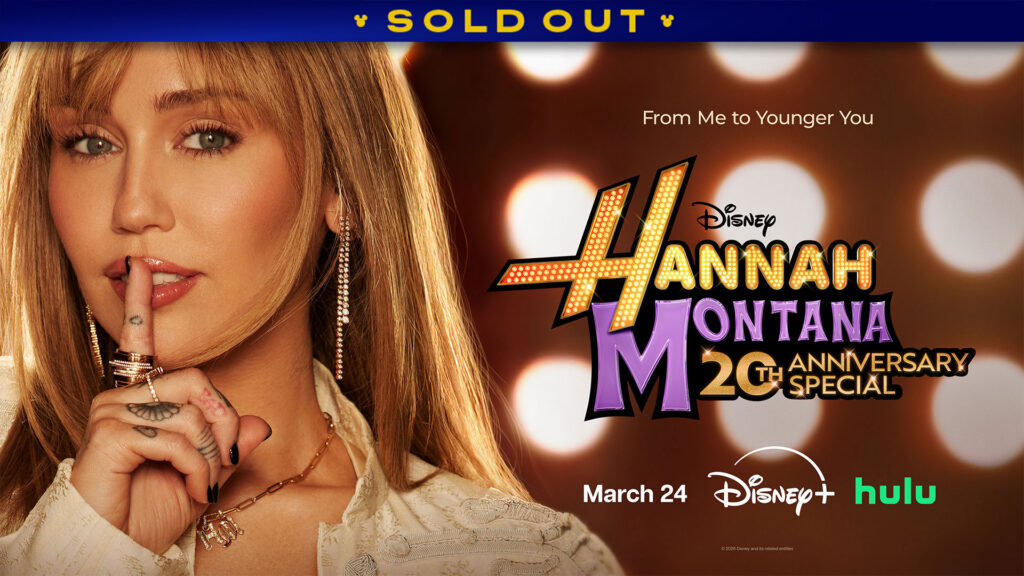
Either let the people who built that world come back and share it together, or commit to the bit and let Hannah herself host the thing. But instead it landed in that awkward middle ground modern pop culture keeps producing — too self-aware to be immersive, too detached to be emotionally satisfying, and too branded to feel truly affectionate.
And that was the problem.
Because the rest of the cast mattered. They put work into that show too. They were part of the chemistry, the jokes, the mess, the magic of it. A real reunion would have let them share memories, behind-the-scenes stories, and the kind of warmth people are actually craving when they show up for nostalgia content.
Nostalgia only works when it feels collective. Otherwise, it starts to feel like a corporate deck with better lighting.
And then there’s the hosting choice. Maybe it is just me!!
My issue is less about any individual controversy and more about the fact that the person guiding that conversation should have had some actual relationship to the cultural universe being honoured. If the point is to celebrate a phenomenon, the host should feel rooted in that world — someone from the cast, someone with genuine emotional proximity, someone who helps the whole thing feel held rather than assembled.
Because that is what so much of culture feels like right now: not poorly made, exactly — just emotionally miscast.
The references are there.
The budget is there.
The audience is there.
But the reverence is missing.
We are being handed back pieces of our own memories in increasingly polished packaging, except the people putting them together do not always seem interested in what made them matter in the first place. They know the image. They know the aesthetic. They know the search value of the name. But they do not always know the emotional contract.
A lot of what passes as inspiration now is really just lifestyle performance. The “ideal” image presented to girls is often polished, aesthetic, curated — but hollow. A room that looks right. A face that looks expensive. A shelf lined with products. A routine that feels less like play and more like upkeep.
It teaches girls to want, but not necessarily to wonder.
That’s a very different thing.
Because wanting what someone owns is not the same as imagining what might be possible for you.
One creates a comparison.
The other creates identity.
When everything is dictated by algorithms, repetition takes over. Discovery shrinks. Personal taste gets replaced by mass sameness. And what gets lost is the magic of finding yourself through curiosity.
Because that is what good teen media used to do. It gave girls permission to feel deeply and dream boldly before the world told them to be practical. And maybe that’s what feels so absent now in women brands.
Not just the shows. Not just the movies. But the cultural permission for girls to imagine a life bigger than what they can buy.
If no one is really talking to women and their inner teenage girls anymore in a way that nurtures imagination, individuality, and emotional depth, then maybe that’s the work in front of us.
To create media, brands, stories, and spaces that don’t just sell them a lifestyle — but remind them they have an inner life worth listening to. Because girlhood was never meant to be reduced to a trend cycle.
It was meant to be a universe.